Garbage Disposal Repair Across California
A garbage disposal has three ways to fail and a handful of causes. It hums and will not spin because something is jammed between the impellers and the grind ring. It is dead because the overload tripped, the breaker tripped, the switch failed or the motor burned out. It leaks from the bottom because the internal seal has gone, or from the top because the sink flange or a hose connection has loosened. A technician sorts those in minutes and carries what most of them need.
We repair and replace disposals in kitchens across California, including the units under a dishwasher connection, the batch feed units in older homes and the compact units in condos. One flat diagnostic fee, the full price in writing before any work, and a replacement quoted on the phone when the symptom makes it obvious.
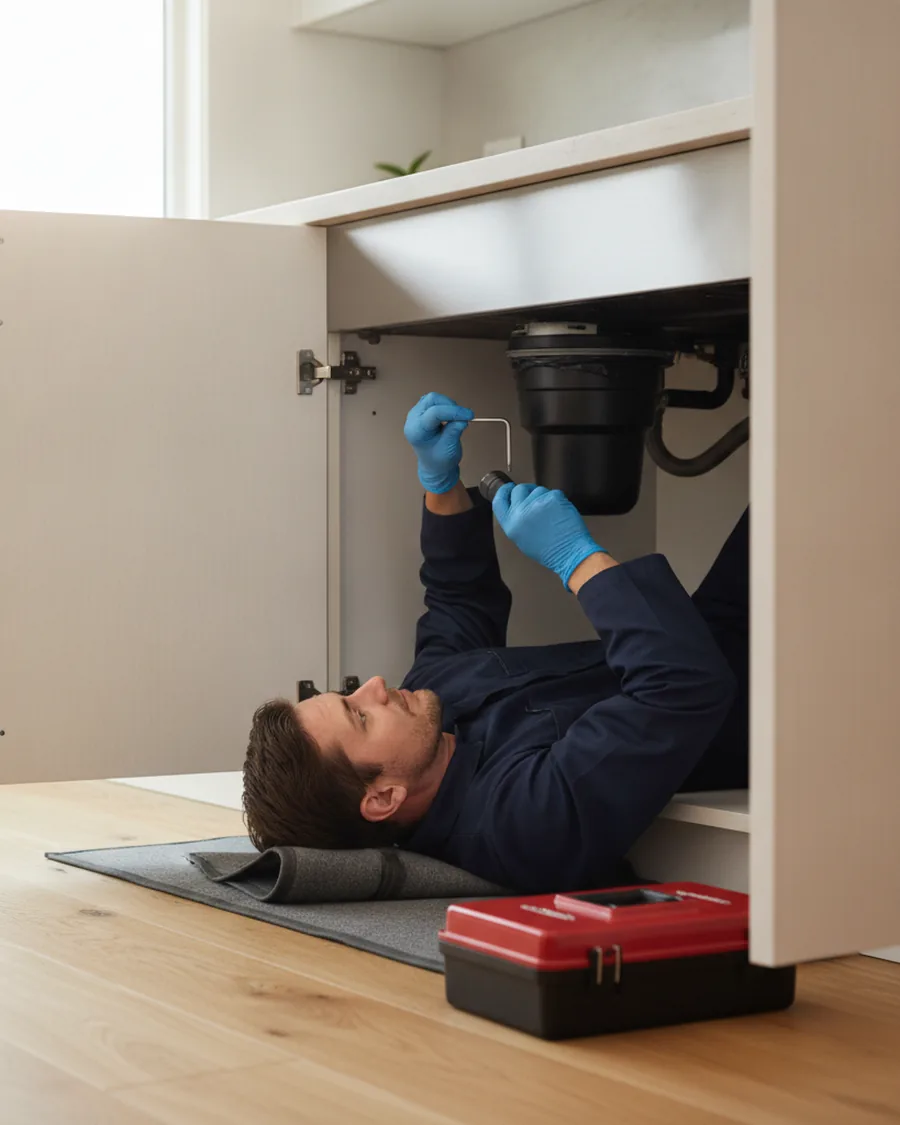
What a disposal is telling you.
Hums, will not spin
The motor is trying and the impeller plate is locked. A bone, a peach pit, a piece of glass, a bottle cap or a stray utensil is wedged in the grind chamber. The fix is to clear the jam from below with the hex key at the base of the unit and from above with tongs, never a hand, then press the reset button on the bottom. A disposal that hums with nothing in it has a seized bearing or a failed motor, and that is a replacement.
Dead, no sound at all
Press the red reset button on the underside first; it trips when the motor overheats or jams. Then check the breaker and the wall switch, because a disposal switch fails more often than people expect and a dead switch looks exactly like a dead disposal. If power reaches the unit and it is silent, the motor is finished. A disposal motor is not repaired, it is replaced with the unit.
Leaking under the sink
Where the water comes from tells the story. A drip from the bottom of the unit is the internal seal, and the disposal is replaced. Water from the top, at the sink, is the flange putty or the mounting ring, which is resealed. Water from the side is the dishwasher hose or the discharge pipe connection, which is a clamp or a gasket. A slow leak under a sink takes the cabinet floor with it, so it is worth a call early.
What we repair on garbage disposals.
Continuous feed and batch feed units, every major brand.
- Jams cleared and the grind chamber inspected for damage
- Reset, wiring, switch, cord and plug faults diagnosed and repaired
- Sink flange, mounting ring and putty reseals for leaks at the top
- Dishwasher inlet, discharge elbow, gasket and clamp leaks
- Splash guards, stoppers and baffles
- Replacement units installed and plumbed, including the dishwasher connection
- Air switch and wall switch installation and repair
- Drain clogs between the disposal and the trap
What garbage disposal repair costs in California.
Disposal work does not fit a table the way a refrigerator does, because most calls end one of two ways: the jam is cleared and the unit is reset, or the unit is replaced. The diagnostic visit is $89, and it covers finding out which of those you have. If the fix is a jam, a reset, a switch or a reseal, you get that price in writing before the work starts, and the diagnostic fee counts toward it.
If the disposal needs replacing, you get a written price for the unit and the install, with the dishwasher connection and the discharge plumbing included, before anything is removed. There is no hourly rate on either path.
Repair it, or replace it?
A jam, a trip, a leak at the flange or a bad switch is a repair on a disposal of any age. Those faults have nothing to do with the motor, and the fix is small. A disposal that has seized, leaks from the bottom or has lost its motor is replaced, because the motor and the seal are not serviceable parts and a new unit costs less than an afternoon of trying.
The one judgment call is a disposal past ten years with a repairable fault. It will work again, but the motor bearings and the seal are near the end, and a replacement now saves a second visit within a year or two. We say which side of that line yours is on, in writing, and you decide.
What people ask before they call.
The hum is the motor trying to turn a plate that is locked. Something has wedged between the impellers on the grinding plate and the ring around it: a peach pit, a bone, a piece of glass, a bottle cap, a fruit sticker, a piece of a plastic utensil. The motor cannot move it, draws full current against the jam, and after a few seconds the overload trips and the disposal goes silent. Every time you flip the switch it does the same thing, and every attempt heats the motor a little more.
The fix is to free the plate, and the disposal is built for it. Turn the switch off. Under the sink, at the very bottom of the unit, there is a hex socket. A quarter inch hex key, the one that came with the disposal or any from a set, goes into it and rocks the plate back and forth until it turns freely. From above, with the power off, tongs or pliers pull out whatever was jammed. Never a hand. Then press the red reset button on the underside, run cold water, and switch it on.
If the plate will not move with the key, or it spins freely and the disposal still only hums, the jam is not the problem. The motor bearings have seized or the motor has failed, and a disposal motor is not repaired, it is replaced with the unit. Call (888) 482-7007 and tell us whether the key turned; that one fact decides the visit.
Disposal work does not sort into a price table the way a refrigerator's does, because nearly every call ends one of two ways: the disposal is cleared and reset, or it is replaced. The diagnostic visit is $89, and it pays for a technician to find out which of those you have, to check the switch, the cord, the reset and the wiring while there, and to look at where any leak is coming from.
If the fault is a jam, a tripped overload, a failed wall switch, a leak at the sink flange or a loose dishwasher connection, the repair is small and it is quoted in writing before the work starts, with the diagnostic fee counted toward it. Those are usually finished in the same visit.
If the disposal has seized, lost its motor or is leaking from the seal at the bottom, the honest fix is a new unit. You get a written price for the disposal and the installation together, including the dishwasher connection and the discharge plumbing, before anything is removed. We match the size and the mount to what is there so the install is clean. There is no hourly rate on either path. Call (888) 482-7007 and describe the symptom; for a disposal that is silent, leaking from the bottom or seized, we can often quote the replacement on the phone.
It depends on which part has failed, because a disposal has parts that are fixed and parts that are not. A jam, a tripped overload, a failed wall switch, a loose cord, a leak at the sink flange, a leak at the dishwasher hose or the discharge elbow, and a worn splash guard are all repairs, on a disposal of any age. None of them touch the motor, and the fix is small.
A seized motor, a burned-out motor, and a leak from the bottom of the unit are not repairs. The motor and the internal seal are not sold as parts, and a disposal with either fault is replaced. A new unit costs less than an afternoon of trying, and the replacement is a single visit that includes the plumbing.
The judgment call is a disposal past ten years with a repairable fault. It will run again after a reset or a reseal, but the bearings and the seal are near the end of their life, and a replacement now saves a second visit within a year. That is a choice we put to you plainly rather than make for you. If you cook a great deal, or the disposal is a small builder-grade unit that has always struggled, the replacement is also a chance to fit a quieter, stronger one. Call (888) 482-7007 with the age and the symptom and we will say which side of the line you are on.
Eight to twelve years is the normal life of a garbage disposal, with the heavier units at the long end and the small builder-grade disposals fitted in tract homes at the short end. The motor bearings and the seal between the grind chamber and the motor are what wear, and when either goes the unit is replaced rather than repaired. A disposal that gets a great deal of use in a large household, or that has been run without water, gets there sooner.
What shortens a disposal's life is what goes into it and how it is run. Fibrous scraps such as celery, corn husks and onion skins wrap the plate, starchy food such as rice and pasta swells into a paste, grease hardens in the chamber and the drain, and bones, pits and eggshells jam the plate and dull it. Running the disposal without a strong flow of cold water, or shutting the water off the moment the noise stops, leaves the chamber and the pipe half cleared. Each jam heats the motor, and a motor that has tripped its overload many times is a motor near the end.
The habits that add years are cheap: run cold water before, during and for fifteen seconds after, feed scraps in slowly, keep the fibrous and starchy things in the trash, and grind a tray of ice now and then to scour the chamber. A disposal inside that span with a jam, a leak at the top or a bad switch is a repair. One past it with a bottom leak or a seized motor is a replacement, and the visit is the same either way.
Jams lead, by a wide margin. The disposal hums, will not spin, and after a few seconds trips its overload and goes quiet. A pit, a bone, a piece of glass, a bottle cap or a utensil is wedged against the grinding plate, and the fix is the hex key at the base of the unit, tongs from above with the power off, and the reset button. Close behind are units that are dead because the reset tripped, the breaker tripped or the wall switch failed, and a failed switch is more common than most people expect.
Leaks are next, and where the water comes from names the part. A leak from the bottom of the unit is the internal seal, and the disposal is replaced. A leak at the top, where the unit meets the sink, is the flange putty or the mounting ring, which is resealed. A leak from the side is the dishwasher hose connection or the discharge elbow gasket, which is a clamp or a gasket. Slow leaks under a sink take the cabinet floor with them, so they are worth a call early.
Then drainage and noise. A sink that drains slowly over a working disposal has a clog between the disposal and the trap, or a chamber packed with grease and starch. A disposal that has become loud, or that rattles, has a foreign object in the chamber, a worn impeller or a motor bearing on its way out. And a smell, which is food in the chamber and under the splash guard rather than a fault. Nearly all of it is one visit. Call (888) 482-7007 with hum, silence or leak.
Every region of California, one number.
Nine dispatch regions and 217 city pages. The technician who comes out works the area you live in.
Sink backed up over a disposal that will not run?
Do not put your hand in it and do not keep pressing the switch. Call (888) 482-7007, tell us hum, silence or leak, and we will give you a time window. Most disposal calls are finished in one visit, replacement included.