Wolf Range, Rangetop and Wall Oven Repair in California
A Wolf range is a simple, heavy machine with a few parts that wear: igniters, spark modules, elements, sensors, hinges and, on newer models, the boards that run the oven. When one of them goes, the range cooks badly or not at all, and the fix is a known part fitted by someone who has had that range apart before. That is what we send. Same day in most metros, one flat diagnostic fee, and the complete repair price in writing before the work starts.
We are independent. We are not Wolf factory certified service, and inside the two year full warranty, or for a listed part inside five, Wolf is the right first call. For the rest of the Wolf ranges in California, which is most of them, you are choosing on skill and price.
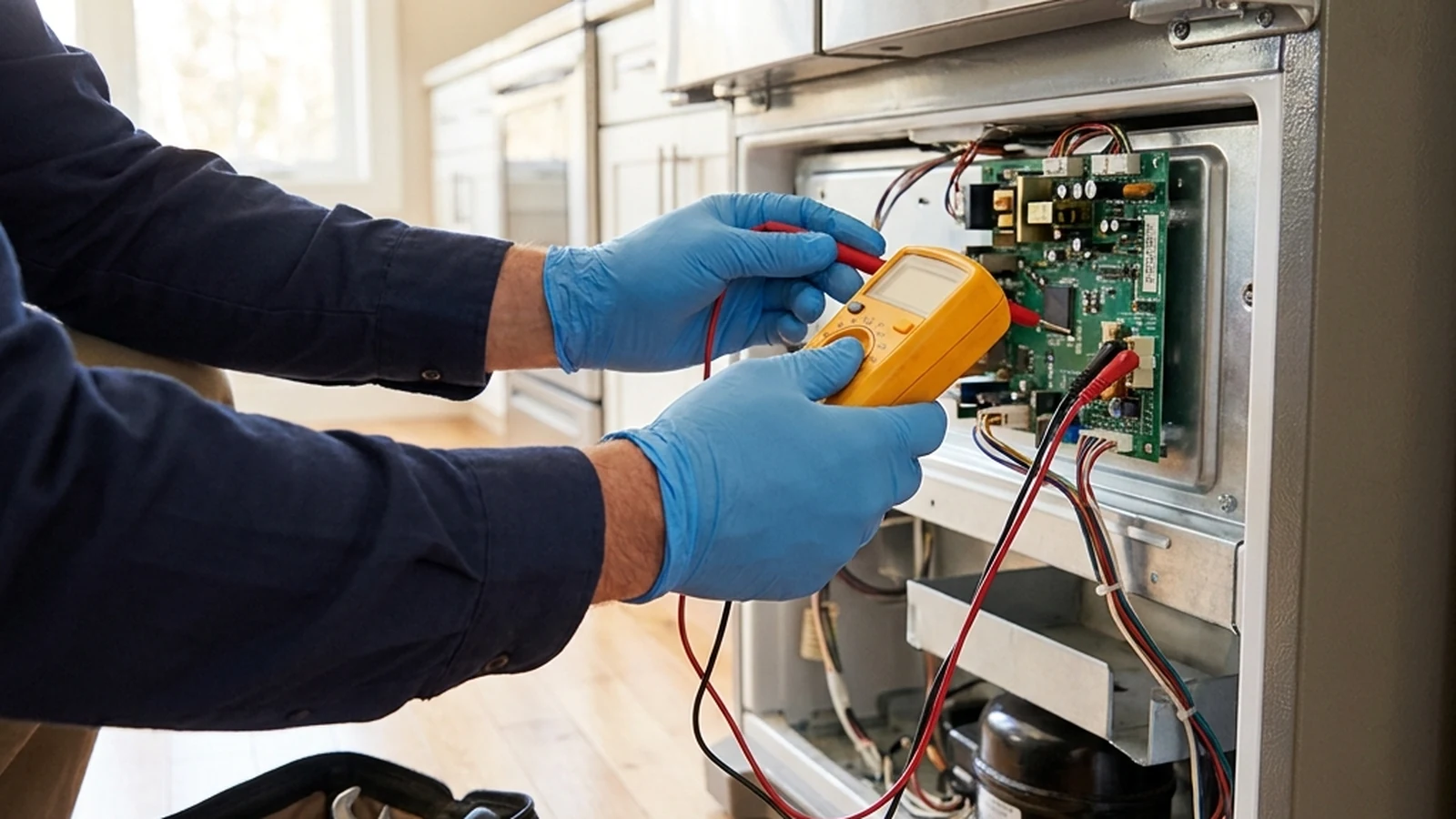
How a Wolf fails, and how we fix it.
The oven that heats slowly or not at all
A gas oven igniter weakens for months before it fails. The glow bar draws less current, the valve waits, and preheat stretches from 8 minutes to 25. On dual fuel and electric wall ovens the same complaint is a burned open bake element or a convection motor that has stopped. Both are single visit repairs with parts we carry.
The burner that clicks and will not light
Wolf cooktops and rangetops fire every igniter together, so clicking is normal for a second. Clicking that never stops is moisture under a burner cap, a cracked igniter, a spark module that has lost an output, or a flame sensing fault that leaves the burner clicking after it has lit. We test each in order rather than replacing the module on a guess.
The electronics and the door
An oven that runs hot or cold against the display has a drifting temperature sensor. One that shuts off mid cycle points to a relay board or a door switch. A door that will not stay shut or leaks heat has worn hinges or a tired gasket. All are defined parts at defined prices.
What we repair on Wolf.
- Dual fuel, gas and induction ranges in every width, including the 48 and 60 inch dual fuel
- Sealed burner rangetops, gas cooktops, induction cooktops and module tops
- E series, M series and earlier L series wall ovens, convection steam ovens and warming drawers
- Oven igniters, spark modules, cooktop igniters, gas valves and burner bases
- Bake and broil elements, convection fan motors and temperature sensors
- Control boards, relay boards, displays, door switches and thermal fuses
- Door hinges, gaskets, glass and handles
- Ventilation hoods and blower motors
What a Wolf repair costs in California.
Wolf repairs are predictable because the parts that fail are predictable. Igniters, modules, elements, sensors, gaskets and hinges, fitted with genuine Wolf parts, typically land between $300 and $900 for parts and labor after the diagnostic fee is applied. Control and relay boards sit toward the upper end of that range, and a quote that lands there will say why.
You pay $89 for the diagnosis, and that amount comes off the repair when you go ahead. You get the full price in writing before anyone opens a panel, there is no hourly billing, and if a part has to be ordered the return visit is inside the quote.
The Wolf warranty, plainly.
Wolf gives two years of full parts and labor from the original installation date. A limited warranty then runs to five years on a named list: gas burners, electric heating elements, hood blower motors, electronic control boards, magnetron tubes and induction generators. In years three through five Wolf supplies those parts and the owner pays the labor, and the coverage applies when the work is done by Wolf factory certified service. Cosmetic issues, including chipped blue porcelain, are not repairs we recommend chasing; they do not affect cooking.
Inside those windows, call Wolf. Outside them, call (888) 482-7007. The parts are genuine either way; the difference is who arranges the visit and who pays for the part.
What Wolf owners ask us first.
A Wolf range or wall oven commonly runs 20 years, and a well kept dual fuel range from the early 2000s is still a normal sight in a California kitchen. The reason is construction. The chassis, the oven cavity, the door assembly and the burner castings are built for commercial style use, and they are not what fails. What does fail over two decades is a short list of consumable and electrical parts: oven igniters, spark modules and igniters on the cooktop, bake and broil elements on electric and dual fuel models, temperature sensors, door gaskets and eventually a control board. Every one of those is a replaceable part.
The units that fall short of 20 years usually have a history. A range that was run for years with a weak oven igniter, for example, stresses the gas valve. One that had a control board fault masked by repeated resets can end up with a second failure. A kitchen where the range was never leveled or the oven door was leaned on as a step wears hinges early.
If your Wolf is between 10 and 20 years old and has one identifiable fault, it has years left in it and repair is the sensible path. Past 20, it still often is. The question is not the age. It is whether the fault is one of the replaceable parts, and on a Wolf it nearly always is.
Repair, in nearly every case. A 12 year old Wolf range is in the middle of its expected life, not the end of it, and a replacement of the same size is a five figure purchase before delivery, gas or electrical work and the inevitable cabinet trim. The fault on a 12 year old unit is almost always an igniter, a spark module, an element, a sensor, a gasket or a control board, and the cost of that part and the labor to fit it is a small fraction of a new range.
There are two honest exceptions. The first is a range that has taken physical damage, such as a warped cooktop from a boil-over fire or a cracked oven liner from impact, where the repair is structural rather than a part swap. The second is a unit with several faults at once, where the sum of the repairs starts to approach real money and the owner wants the newer convection or induction features anyway. Even then, the repair quote is the number you compare against, and you should have it in hand before deciding.
What we will not do is talk you into a replacement to avoid a hard repair. A written quote after a $89 diagnostic, the fee credited when you go ahead, and a plain answer about whether the range has a future. That is how it works.
The single most common Wolf service call is an oven that heats slowly, will not reach temperature, or will not light at all, and the cause is usually the oven igniter. Gas igniters weaken with age long before they fail outright: the glow bar draws less current, the gas valve waits, and the oven takes 20 minutes to do what it used to do in 8. On dual fuel and electric wall ovens the equivalent complaint is a bake or broil element that has burned open, or a convection fan motor that has stopped moving air.
Second is the cooktop. Burners that click continuously, click but do not light, or light on one side only usually come back to a wet or cracked igniter, a burner cap that is not seated, or a spark module that has lost an output. Those are quick repairs once diagnosed.
Third are the electronics, which show up as an oven that runs hot or cold against the set temperature (a temperature sensor), an oven that shuts off mid cycle (a relay board or a door switch), or a control panel that stops responding. Fourth is the door: hinges that no longer hold the door closed and gaskets that let heat escape, both of which cost energy and cooking accuracy. Blue porcelain chipping inside the oven is cosmetic and comes up often, but it does not affect cooking.
Continuous clicking means the spark system is doing its job and something else is stopping the flame. The most common cause is moisture. A boil-over, a heavy cleaning, or a wet cloth left on the cooktop soaks the ceramic igniter or the area under the burner cap, and until it dries the spark cannot jump to the gas. Let the cooktop dry for an hour, check that the burner cap is seated flat on the base with the igniter sitting in its notch, and try again. If every burner clicks together when one knob is turned, that is normal on a Wolf; the module fires all igniters at once.
If the burner is dry and clean and still will not light, the candidates are a cracked igniter electrode, a burner base with a corroded or blocked gas port, a spark module that has lost an output, or a gas valve not opening. If a burner lights and then keeps clicking after the flame is established, the flame sensing on that position has failed and the module does not know the burner is lit, which is a part, not a habit to live with.
The safety line is simple: if you smell gas while a burner clicks and does not light, turn the knob off, open a window and stop trying. Then call (888) 482-7007. This is a common, well understood Wolf repair and it is nearly always finished in one visit.
Most Wolf oven repairs fall into a predictable band because the parts that fail are predictable. An oven igniter, a spark module, a cooktop igniter, a temperature sensor, a bake or broil element, a door gasket or a set of hinges, fitted by a technician who knows the platform, typically lands between $300 and $900 for parts and labor after the diagnostic fee is applied. Genuine Wolf parts cost more than generic equivalents, and on this platform they are worth it, because a non-genuine igniter that draws the wrong current will fail again inside a year and can stress the gas valve.
The upper part of that range is where control boards and relay boards live, along with jobs that take longer, such as a convection fan motor behind the oven liner or a cooktop that has to come apart to reach a gas valve. A quote that lands there will say why.
We charge a flat $89 diagnostic fee, credited to the repair when you go ahead, and you get the complete price in writing before anyone opens a panel. No hourly billing, and if a part has to be ordered, the return visit is part of the quote. If the technician finds the range is not worth the repair, you have paid for the diagnosis and nothing more.
Wolf's residential warranty gives two years of full coverage from the original installation date: parts and labor to repair or replace any part that proves defective in materials or workmanship under normal residential use. After that, a limited warranty runs to five years on a named list of parts: gas burners (not their appearance), electric heating elements, blower motors in ventilation hoods, electronic control boards, magnetron tubes in microwaves and induction generators. In years three through five Wolf supplies those parts and the owner pays the labor, and that coverage applies when the work is done by Wolf factory certified service. So yes, a control board is covered for five years, with labor on the owner from year three.
We are independent, and we say so up front. Inside the first two years, or for a listed part inside five, your first call should be to Wolf to arrange certified service so the part is supplied under the warranty.
Outside those windows, which describes most Wolf ranges in California, the warranty is no longer part of the decision and you are choosing a technician on skill and price. That is where we work: igniters, modules, elements, sensors, boards and doors on ranges, rangetops, cooktops and wall ovens, with genuine parts, an upfront quote and a warranty on our own work.
No, and the better news is that it does not need fixing. The cobalt blue interior on a Wolf oven is a porcelain enamel fused to steel at high temperature. Once it chips, usually from a rack dragged across the floor of the cavity, a heavy pan dropped on it, or a sharp thermal shock, there is no touch-up that survives 500 degree cycles. Kits sold for the purpose are cosmetic at room temperature and lift or discolor once the oven is used. The honest answer is that a chip is permanent.
The good news is that it is also harmless. The enamel is a finish, not a structural or food safety layer, and a chip exposes steel that will discolor with heat but does not affect temperature, convection airflow, self clean or the safety of anything you cook. We do not recommend replacing an oven liner for cosmetic chips; on most models it is not a serviceable part, and on the ones where it is, the cost is out of proportion to the benefit.
What to do instead: keep chips from spreading by lifting racks rather than dragging them, avoid pouring cold liquid onto a hot oven floor, and skip abrasive pads on the enamel. If the chipping is extensive and accompanied by rust or a bubbling finish, that is a different story, usually water intrusion, and it is worth a diagnosis. For the ordinary chip, cook on.
The other luxury brands we repair.
Wolf not lighting or not heating? Call now.
Tell us the model, the fuel type and what the range is doing, and we will send a technician who has worked on it. If you smell gas while a burner clicks, turn the knob off, open a window and call first. We answer (888) 482-7007 seven days a week, 6am to midnight.