Viking Range and Refrigerator Repair in California
Viking built its name on the professional range, and a Viking kitchen in California usually means a 36 or 48 inch range plus a built-in refrigerator that has been working hard for a decade or more. Both are worth repairing, and both punish guesswork. A range that will not light needs its igniters and modules tested in order; a refrigerator that is warm and buzzing needs a meter on the compressor before anyone condemns it. We send technicians who have done exactly that on this platform, same day in most metros, with one flat diagnostic fee and the full price in writing before the work.
We are independent, not a Viking authorized service agency. Inside Viking's warranty windows, Viking is the right first call. Outside them, which describes most Viking appliances in the state, this is what we do.
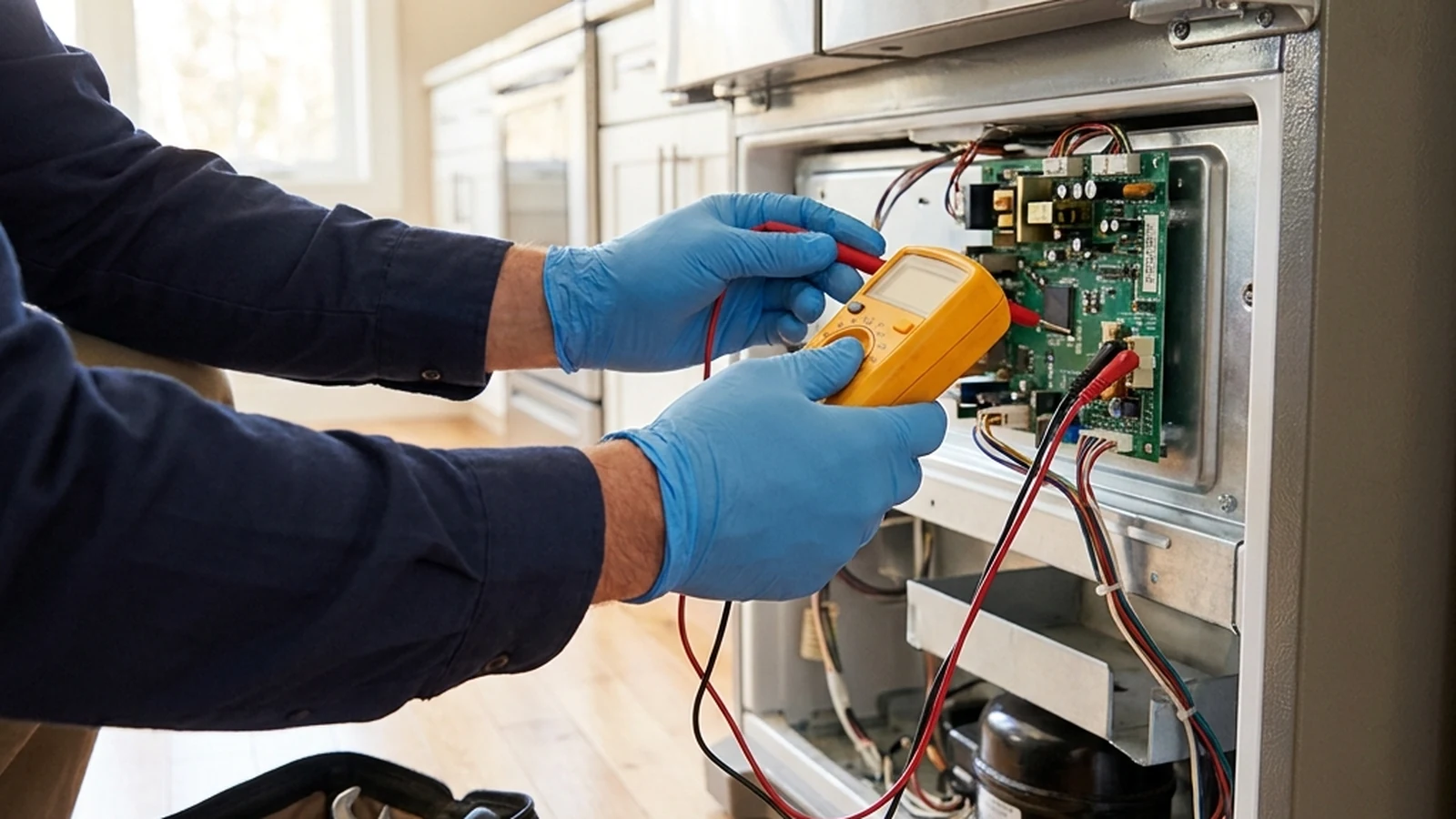
Where Viking appliances fail.
Ranges and rangetops: ignition first
The most frequent Viking range call is an oven that heats slowly or a burner that clicks without lighting. Weak oven igniters, cracked burner igniters, wet or misaligned burner caps and spark modules with a dead output account for most of it. Bake and broil elements on the dual fuel models and drifting temperature sensors make up the rest. These are quick, single visit repairs with parts on the truck.
Refrigerators: airflow, defrost and the compressor
A Viking built-in that runs warm usually has a stopped evaporator fan, a failed defrost heater or thermostat that has let the coil freeze solid, or a condenser packed with dust. A unit that hums, clicks and stays warm has a start relay or overload fault more often than a dead compressor, and telling those apart is a five minute test that saves a great deal of money. Genuine sealed system faults are diagnosed with gauges, not assumptions.
Doors, ice and noise
The heavy paneled doors on Viking built-ins wear their hinges and closers, and a door that no longer self closes causes frost, humidity and long run times. Ice makers stop on scaled inlet valves and frozen fill tubes. New noises, from a fan blade in ice to a compressor short cycling, are worth a call rather than a wait.
What we repair on Viking.
- Professional series gas, dual fuel and electric ranges in 30 to 60 inch widths, including the 5 Series and 7 Series
- Rangetops, gas and induction cooktops, wall ovens, French door ovens and warming drawers
- Built-in side by side, bottom freezer and column refrigerators, undercounter units and ice machines
- Oven igniters, cooktop igniters, spark modules, gas valves, elements and sensors
- Evaporator and condenser fans, defrost heaters and thermostats, dampers and gaskets
- Compressors, start relays, overloads and sealed system leaks
- Ice makers, water valves and dispenser faults
- Control boards, displays and door hardware
What a Viking repair costs in California.
Range and oven repairs, and most refrigerator repairs outside the sealed system, typically land between $300 and $900 for parts and labor after the diagnostic fee is applied. Compressor and other sealed system work on a built-in refrigerator is a longer job by an EPA certified technician and typically runs between $800 and $2,200.
A flat $89 diagnostic fee gets the technician to your door and is applied to the repair you approve. The full price is in writing before any work starts, there is no hourly clock, and a return visit for an ordered part is inside the quote. If the honest answer is that the appliance is not worth the repair, you will hear it.
The Viking warranty, plainly.
Viking gives two years of complete parts and labor coverage on cooking, ventilation, refrigeration and dishwashers from the date of purchase. A limited warranty then covers specific parts through year five with the owner paying labor: gas burners, electric heating elements, dishwasher racks, controls and motors, and ventilation motors among them. Built-in refrigeration gets six years of parts and labor on the sealed system and parts coverage to twelve years. There is a 90 day cosmetic warranty. Viking does not offer a lifetime warranty, and warranty service must be performed by a Viking authorized service agency.
Inside those windows, call Viking. Outside them, call (888) 482-7007.
What Viking owners ask us first.
A Viking built-in refrigerator that gets basic care will typically run 15 to 20 years, in line with the other luxury built-in platforms. The cabinet, the panels and the door hardware are built for that span. What decides whether a particular unit gets there is the sealed system and the airflow around it: a condenser that is cleaned, a compressor that is not made to run hot for years, and evaporator fans and defrost parts that get replaced when they fail rather than ignored.
Viking's own warranty tells you what the company expects of the refrigeration side. On built-in models the sealed system, meaning the compressor, evaporator, condenser, tubing and drier, carries parts and labor coverage for six years and parts coverage to twelve. Nobody writes a twelve year term on a part they expect to last eight.
Age alone is not a reason to replace one. A 15 year old Viking with a failed evaporator fan or a worn gasket is a repair, and a good one. Where the conversation changes is a sealed system failure on a unit already past 15, where a compressor or evaporator replacement is a bigger job and the rest of the machine deserves an honest look first. Our technician gives you that assessment on the first visit, with the price of the repair in writing, and the decision stays yours.
Usually, yes, and a Viking range makes the case better than most appliances. It is a heavy, simple machine at heart: cast burners, a gas valve, igniters and spark modules on top, an igniter or elements and a thermostat or sensor in the oven, a control board on newer models. Fifteen years of use wears the consumable parts on that list, not the range itself. Replacing a weak oven igniter, a cracked burner igniter or a tired spark module returns the range to the way it cooked when it was new, at a fraction of what a new 36 or 48 inch professional range costs installed.
Where the answer tips toward replacement is when several systems fail together on a range that was neglected, or when the oven cavity or cooktop has physical damage. A range that needs an oven igniter is a repair. A range that needs an igniter, a control board and a new door assembly at the same time is a conversation, and the total on the written quote is what you compare against a replacement.
One thing in Viking's favor at 15 years is parts availability. The core parts for the professional series ranges have stayed in production or have direct replacements, so an older unit is not a hunt for obsolete components. Our diagnostic fee is $89, credited to the repair, and the quote comes before any work.
The complaints we hear most on Viking built-in refrigerators cluster in three areas. The first is cooling and airflow: a unit that runs constantly, a fresh food section that will not hold temperature while the freezer is fine, or frost building on the back wall. Behind those symptoms are usually an evaporator fan that has stopped, a defrost heater or thermostat that has failed and let the coil ice over, a condenser fan or a condenser packed with dust, or on older units a sealed system fault such as a weak compressor or a refrigerant leak.
The second area is the doors and the ice maker. Door hinges and closers on the heavier panel-ready models take real load and wear, and a door that does not self close leads straight to frost and humidity. Ice makers fail in the ordinary ways: a water inlet valve that scales up in hard water, a fill tube that freezes, or an assembly that stops cycling.
The third is noise, which on a Viking is a symptom worth taking seriously rather than tolerating. A fan blade touching ice, a fan motor with a dry bearing, a compressor that is struggling to start, or a rattling condenser fan each has its own sound, and a technician who knows the platform can usually name the part from the noise and the temperature readings on the first visit.
Noise plus warm temperatures narrows the fault quickly, because the sound usually tells you which part is failing. A loud buzz or hum from the bottom rear that stops after a few seconds, then repeats a few minutes later, is a compressor trying to start and tripping its overload. The cause can be a failed start relay or capacitor, which is an inexpensive part, or a compressor that is seizing, which is not. A technician can tell which with a meter and an amp reading in minutes.
A clicking or scraping from inside the freezer or the back of the fresh food section is an evaporator fan blade hitting ice. The ice is there because a defrost component has failed and the coil has frozen solid, which also blocks airflow and explains the warm temperatures. The fix is the defrost part plus clearing the ice, and sometimes the fan motor if the blade damaged it. A constant whir that has changed pitch is usually a fan motor bearing on its way out.
A rattle from the top or bottom grille is normally the condenser fan, and if the condenser behind it is packed with dust the unit will run warm regardless. What matters is not waiting. A compressor short cycling against a bad relay can be saved; one left to hammer for weeks often cannot. Move perishables to a cooler if the fresh food side is above 40 degrees and call (888) 482-7007.
A compressor replacement is sealed system work, which puts it in the most expensive category of refrigerator repair, and on a Viking built-in it typically runs between $800 and $2,200 for parts and labor. The price reflects what the job involves: recovering the old refrigerant with certified equipment, replacing the compressor and the filter drier, brazing the joints, pulling a vacuum on the system, weighing in a fresh charge, and testing. It is a half day of skilled work by an EPA certified technician, not a part swap.
Before that number is quoted, two questions get answered. First, is it really the compressor? Many refrigerators that appear to have a dead compressor have a failed start relay or overload, which costs a small fraction of a compressor job. Second, is the compressor still under Viking's sealed system coverage? On built-in models Viking covers the sealed system for six years with parts and labor and to twelve years for parts, so a unit inside that window should go to Viking authorized service first.
For a unit outside coverage, which is most of them, our technician confirms the diagnosis, checks the rest of the sealed system for leaks, and gives you a written price for the whole job before starting. The diagnostic fee of $89 is credited to the repair. If the unit is old enough that a compressor job does not make sense, you will hear that plainly.
No. Viking does not offer a lifetime warranty on its residential appliances, and any listing or salesperson suggesting otherwise is wrong. The current Viking warranty gives two years of complete parts and labor coverage on cooking products, ventilation, refrigeration and dishwashers from the date of purchase. After that, a limited warranty covers specific parts through year five with the owner paying labor: gas burners on ranges, rangetops and cooktops, electric heating elements in ovens and warming drawers, and racks, controls and motors on dishwashers, among others. Built-in refrigeration gets the longest term, six years of parts and labor on the sealed system and parts coverage to twelve years. There is also a 90 day cosmetic warranty against finish defects.
Viking states that warranty service must be performed by a Viking authorized service agency. We are independent, not a Viking authorized agency, and if your appliance is inside one of those windows with a covered fault, the right first call is Viking, so the part is supplied under the warranty.
Once the coverage has run out, which is the case for most Viking appliances in California kitchens, the warranty is no longer part of the decision. Then you are choosing on skill and price, and Viking ranges, rangetops and refrigerators are among the platforms we repair most.
Sometimes, and it costs nothing to try, but it only fixes a narrow set of faults. There is no hidden reset button on a Viking refrigerator. A reset means removing power long enough for the control board to clear its state and for the compressor's overload to cool: switch the unit off at its control if it has one, then turn off the breaker or unplug it, wait five to ten minutes, and restore power. Give it a full hour before judging the result, because a built-in needs that long to pull temperatures down and show you whether the fault is gone.
A reset is worth trying in a few specific situations. After a power outage or a brownout, a control can lock up or show a temperature alarm that has nothing to do with the hardware. If the display is dark but the unit is cold, or the controls will not respond to any key, a power cycle often clears it. Sabbath mode on newer models can also look like a dead display, so check the manual for that setting before assuming a fault.
A reset is not a fix for a refrigerator that is warm, running constantly, making a new noise, or building frost. Those are mechanical faults: a fan, a defrost part, a relay, a sealed system. Power cycling may quiet the symptom for a day and the fault comes straight back. If you have reset it twice and the problem returns, stop resetting and call (888) 482-7007, because the second and third failures of a compressor overload are the ones that cause lasting damage.
The other luxury brands we repair.
Viking not lighting, not cooling or making a new noise?
Tell us the model and the symptom and we will send a technician who has worked on it. If the fresh food side is above 40 degrees, move perishables to a cooler first; the repair is usually quick, but the food will not wait. Call (888) 482-7007 any day of the week between 6am and midnight.